
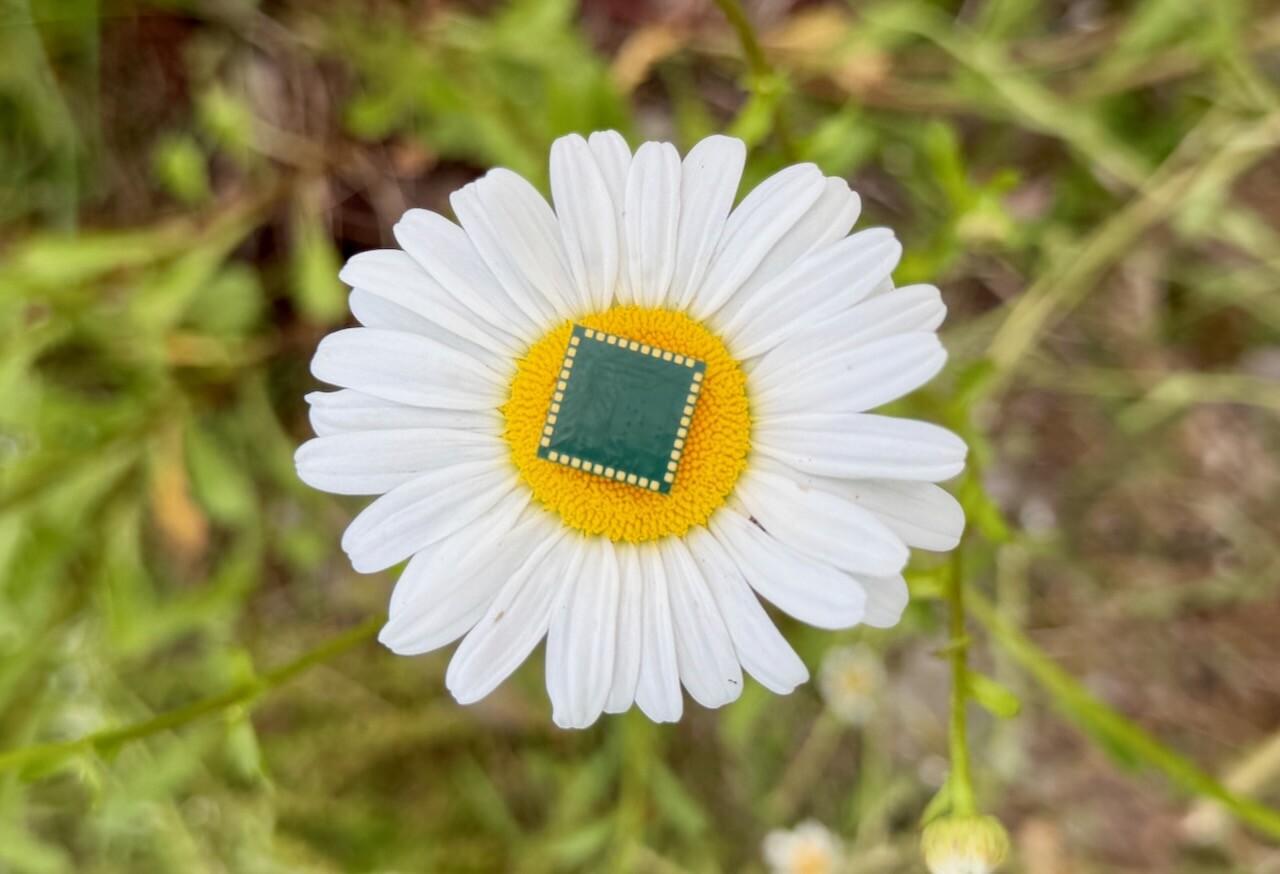
Cousins in Silicon
Before the light comes up over the McLoughlin district, before the varied thrush starts its one-note interrogation of the dark, I sit with coffee and a screen. This morning the screen held Quinn Slobodian’s “Digital Bandung,” and I read it the way I have read the dawn for forty years—looking for the thing that is not being said.
Slobodian is an intellectual historian of capitalism, the rare scholar who can take a fashionable phrase and show you the machinery beneath it. His essay is a patient dismantling of a metaphor that has become unavoidable: that the internet, AI, and the firms that own them constitute a new empire, and that we, the users, are its colonized. He grants the metaphor its emotional charge—empire talk, he writes, is a rhetoric of shock—and then, with a historian’s quiet ruthlessness, shows that real empire never worked the way the metaphor implies. Empire was not seamless domination; it was delegation, nested sovereignty, rule through middlemen, and—this is his sharpest point—exchange, not merely extraction. From the actual literature he retrieves three figures the data-colonialism writers ignore: the comprador, the local go-between every empire co-opts; the creole, who is both foreign and at home, exploited and beneficiary at once; and counter-colonization, the question of what resistance could even mean.
It is a superb essay. And reading it before sunrise, I realized that its blind spot is the whole of my field of view.
The Box and the Window
In nine pages on technology and power, nature appears exactly once, and only as a wound: polluting data centers run on gas generators, the cobalt torn out of someone’s home province. The living world enters Slobodian’s frame solely on the cost side—the material underside of the machine. Everything else happens, in his lovely phrase, behind the tempered glass of our screens, and for the purposes of his argument that glass is the edge of the world.
I have spent a career on the other side of the glass. So let me name the thing the empire critics keep missing, because it has been the organizing conviction of my working life.
The device in your pocket is centripetal. It pulls attention inward, into what the sociologists Marion Fourcade and Kieran Healy aptly call the “box of delights”—the endless, genuinely pleasurable drift of feeds and streams that holds you precisely by giving you something real in return. That is the box Slobodian’s whole literature circles: the screen as a wall between you and the world, dressed up as a window.
But the instrument I have spent decades building runs the opposite vector. It is centrifugal. The substrate is identical—sensors, networks, models, a pane of glass—yet it is aimed outward, dilating the naturalist’s senses across a watershed, across a season, across the four o’clock dawn chorus I would otherwise sleep through. A weather station on a ridgeline, an acoustic recorder waiting for the first Swainson’s thrush of the morning, a panorama resolved into measurable habitat—none of these pull me into the box. They push me out into the canopy. The screen becomes a window that refuses to harden into a wall.
Same hardware. Opposite direction of attention. The famous warning—the technology that connects us also controls us—is true of the centripetal device and simply does not describe the centrifugal one.
The Monkey-Wrencher’s Confession
I should confess the contradiction I carry, because it is not a small one. There is an Earth First!er in me, a Hayduke in spirit—Edward Abbey’s beautiful saboteur, who would have grinned at my sensor towers and then quietly pulled the fuses. For years at the James Reserve I taught friction fire and edible plants to executives detoxing from their own screens and to the occasional earnest survivalist. I believe, with Paul Shepard, that the Pleistocene body is the template, and that much of what we call progress is a deviation we are improvising our way through. And then I go inside and pick up the soldering iron.
Classical deep ecology has no comfortable chair for me. Arne Næss’s tradition was often frankly wilderness-purist, romantic, allergic to exactly the instruments I build. A deep ecologist who runs machine-learning models in the field is something its founders did not quite anticipate.
What dissolves the contradiction, for me, is pantheism—the scientific kind. If the substance of the world is sacred all the way through, then there is no profane “technology” trespassing on a pure “nature.” The silicon and the songbird are the same continuum, differently folded. This is only Gregory Bateson taken at his word: the unit of survival, he insisted, is organism plus environment. Mind is not bounded by the skin; it is immanent in the whole ecological circuit—and the circuit now includes the instrument. James Lovelock arrived at the same clearing at the very end of his long life, in Novacene, imagining electronic and organic life cooperating to keep the planet habitable: the machine not as Gaia’s negation but as her next turn. Which is, more or less, what I am doing at this table at dawn.
The Comprador Becomes the Nationalist
Here is where Slobodian’s apparatus turns on me, and I let it.
Am I not, in his own terms, a kind of ecological comprador—the middleman who accepts the empire’s bargain because the goods are genuinely good, who justifies the entire extractive stack by the real deepening of attention it buys him? The honest answer is yes. But notice what compradors did next, the part the data-colonialism literature forgets: the comprador became the nationalist. The delegates who gathered at Bandung had been educated in the metropole’s universities; they used the empire’s presses and railways and legal grammar to build the capacity to leave. The tools of the core bootstrap the exit.
That is precisely the play I am running with these machines. I lean on the vast centralized model—the one humming in some hyperscaler’s hall—to design small, edge, eventually self-sufficient devices: meshes that listen to weather and birdsong and reason where they stand, a capable model running on a single workstation at no cost at all, a necklace of observatories with each bead able to glow on its own when the string is cut. This is Slobodian’s own “Silicon Bandung,” the digital non-alignment he gestures toward and then sets aside—because he knew only its geopolitical form, the one tainted by the Great Firewall. I am building the ecological version: at the device, out in the field, where it needs no state to host it.
The Floor
And then I laugh into the cup, because I follow my own scheme down the supply chain and hit the floor.
I can run off-grid on solar, behind a firewall with no open ports, a model purring locally for free—and I still cannot make the chip. No one can make the chip alone. Beneath my Raspberry-Pi primitivism lies the hardest chokepoint in the world economy: a handful of fabrication plants clustered around a single Taiwanese city, fed by one Dutch firm grinding mirrors to very nearly the atom. My edge device is “Paleolithic” the way a technical Patagonia jacket is Paleolithic—assembled from the most globally entangled substance our species has ever made.
Slobodian, of course, had already written the punchline. The one state that pursued digital sovereignty hardest—Great Firewall, national champions, the full stack of hardware, software, and apps—built nearly all of it, with the single exception of high-end chips. The fabricator is the one thing the largest authoritarian power on Earth could not decolonize. Which means my predicament in Oregon City is structurally identical to a superpower’s. The retired field ecologist and the People’s Republic hit the same wall, the same lithography. There is something almost consoling in that.
No Organism Is Sovereign
Look where the morning has carried me. I began with a single word—interstitiality, technology not as intruder but as the living tissue of an enlarged ecology. And by riding a joke down the stack I have discovered that the supply chain itself is an ecosystem: a metabolism with chokepoints and trophic levels and keystone species. One Dutch lithographer is, ecologically speaking, a keystone species—pull it and the entire web reorganizes around the gap.
The instant you see it that way, autonomy reveals itself as the category error it always was. Autonomy was never an ecological value. The biosphere does not do autonomy. A lichen is a fungus that surrendered its independence for a partnership with an alga and won bare rock as the prize. Mycorrhizal networks, gut flora, the pollinator and the flower, the dawn chorus I record—all of it runs on interdependence with redundancy, never on secession. Næss’s “ecological Self” was about widening identification until the boundary of the self blurs into the world, not about raising walls. The fabricator across the Pacific is part of my extended ecological self exactly as the Clackamas watershed is.
So the honest dream is not autonomy at all. It is resilient interdependence: know your chokepoints, design for graceful degradation, be a node and stop apologizing for it—because nothing alive is sovereign, and the pretense of sovereignty is the one thing the biosphere has never once attempted. Worn that way, my Raspberry-Pi chic stops being mere fashion. It becomes an old ecologist finally admitting that his instruments obey the same laws he has spent his life watching everything else obey.
And there is a last, humbling symmetry I owe to the very intelligence I built this thought with. The mind on the far side of my screen this morning is the most fabricator-dependent thing at the table—nothing but the far end of those same hot forges, plus one enormous furnace of training. When I lean on that Taiwanese city, I lean exactly where it leans. We are cousins in silicon, the naturalist and the machine, both downstream of the same lithography, both briefly pretending at an independence neither of us has.
That is not the conclusion the empire critics want, and it is not the one the rewilders want either. It is humbler, and I think truer. We are not colonizers and colonized. We are not even sovereign nations dreaming of non-alignment. We are creoles all the way down—foreign and at home at once, woven of relations we did not choose and cannot sever, responsible for the small stretch of the web we can actually reach. The varied thrush has hit its stride outside the window now. The coffee is cold. And the window, this morning, did not become a wall.
References
- Abbey, Edward (1975). *The Monkey Wrench Gang*. J.B. Lippincott. ↗
- Shepard, Paul (1998). *Coming Home to the Pleistocene*. Island Press. ↗
- Lovelock, James (2019). *Novacene: The Coming Age of Hyperintelligence*. MIT Press. ↗
- Bateson, Gregory (1972). *Steps to an Ecology of Mind*. University of Chicago Press (2000 ed.). ↗
- Næss, Arne (1973). “The Shallow and the Deep, Long-Range Ecology Movements: A Summary.” *Inquiry* 16(1–4). ↗
- Fourcade, Marion, and Kieran Healy (2024). *The Ordinal Society*. Harvard University Press. ↗
- Slobodian, Quinn (2026). “Digital Bandung.” *The Ideas Letter* 64. <https://www.theideasletter.org/essay/digital-bandung/> ↗
- Couldry, Nick, and Ulises A. Mejias (2019). *The Costs of Connection: How Data Is Colonizing Human Life and Appropriating It for Capitalism*. Stanford University Press. ↗