
Ninety-Nine Percent Still There
I have been reading about the flood every day since it happened. Not usefully. I am not going to Nepal, I have no expertise in Himalayan glaciology, and my reading has produced nothing but a more detailed interior picture of a wave arriving faster than panic. This morning Bill McKibben's newsletter came in and told me to look at the photograph, and I looked at it for a long time, and then I went and made a second cup of coffee and stood at the window in Oregon City in the ordinary late-summer light.
McKibben's point about the image is the only one that has stayed with me. A tour guide filmed it, and in the frame the falling ice reads as a kind of waterfall, a bright seam down the face. What McKibben asks you to notice is not the seam. It is everything around it. To the naked eye, something like ninety-nine percent of that glacier is still standing. And this is one glacier of perhaps fifty thousand across the Himalaya and the Hindu Kush.
He means it as an argument about damage still available to be prevented, and he is right, and I will come back to that. But I read it first as a fact about attention. The catastrophe is the part that moved. The part that did not move is the part nobody photographs, and it is nearly all of it.
I spent thirty-six years running field stations on the theory that the unmoved part is the story. You put instruments on a mountain and leave them there for two decades not because you expect a collapse but because without the long record you cannot say what a collapse is a departure from. The whole discipline of baseline is an argument that the boring ninety-nine percent is the measurement and the event is merely the moment the measurement becomes legible to people who were not paying attention.
So I have been sitting with the flood. And in the same week, in the same interior space, Dolly Parton died.
I lived in Idyllwild for twenty-six years, directing the James San Jacinto Mountains Reserve 9 miles down the road towards Banning. Dolly and her sister had a cabin in Pine Cove. She only sold it in 2024, which I learned the way you learn most things about your former town, secondhand and late.
I met her a few times. That is the honest extent of it. She would be at a table in one of the restaurants and you would notice and then you would go back to your dinner, because that was the arrangement. Idyllwild had a number of people like her, and the reason they were there at all was that the town had a settled understanding about not making anything of it. They came up the hill precisely to be uninteresting for a few days. The town's part of the bargain was to let them.
My girlfriend for many years in those days was Sue, our local florist. Which meant she was on the other side of that arrangement, the side where the arrangement is transacted. People like Dolly need flowers sent, arrangements delivered, occasions marked, and somebody local does that work and comes home with stories. Sue loved to tell them. I am not going to tell them here.
That is not coyness. It is the whole point of the place. The discretion was not a rule imposed on the town; it was the town's actual product, the thing it made and exported, and everyone who lived there participated in manufacturing it. Sue kept those confidences for forty years and I am not going to spend them in an essay because the woman they concern has died and can no longer consent. What I can say is that the stories were warm. That is not nothing. You learn something real about a person from how they handle a florist.
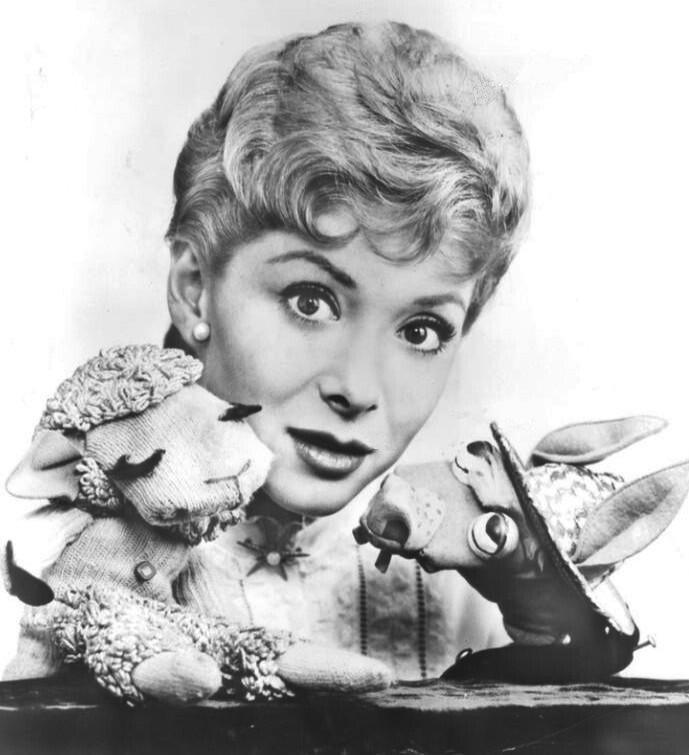
What the arrangement bought the town was not just celebrity dollars, though those mattered to businesses operating on a thin mountain economy. It bought a strange density of creative people in a place of a few thousand residents, and the overflow landed on our children. My kids saw Shari Lewis perform. The woman who made Lamb Chop, doing personal shows for Idyllwild children, because she lived up the hill too and that is what you did. Art and music and puppetry and a serious environmental ethic all circulating through a small community at a concentration you would never get in a city, because in a city those people are working and in Idyllwild they were resting and generous.
I left in 2008. Sue is fine; we reach out now and then. Our daughters are in their forties and still in touch with each other. So the place did not end. I merely stopped being in it, which is a different and much smaller thing, and one of the mercies of this week has been remembering the difference.
Here is what I have not been able to resolve.
A valley of strangers on the Tibet-Nepal border was destroyed and the number of dead is still not firm. A woman I met a handful of times, thirty years ago, at another table, has died at the end of a very long and fortunate life. These two facts have occupied the same week in my head and I cannot get them to sort by magnitude. Every honest scale I can construct says the flood is the larger thing by orders I cannot write down. And the grief does not comply. It sits there in two heaps of roughly equal weight and refuses to be graded.
I have spent my career insisting that things be measured, and I think the refusal here is not a failure of moral seriousness. I think it is information about what grief is for. Grief is not a ranking function. It is what attachment does when the object goes away, and attachment is local, embodied, and radically unscaled. I grieve Dolly because I stood in a room with her and because Sue told me stories and because my children saw Lamb Chop. I grieve the valley because McKibben stood in that border crossing and wrote a paragraph good enough to put me there. The second grief is entirely constructed out of language and it is real anyway. That is what writing is for, and it is most of what we have for people we will never meet.
The trap is in believing the two feelings have to be reconciled before either can be acted on. They do not. And McKibben's move at the bottom of his own newsletter, which I only noticed on the second read, is to put Dolly there himself. One of her last original songs was called World on Fire, and he links the performance where she sang it in a dress made to look like a burning globe. She saw the thing plainly and said so, in her register, to an audience that would not have listened to me or to McKibben. So the two heaps in my head turn out to have been in contact all along, and I did not put them in contact. She did.
Which returns me to the ninety-nine percent.
McKibben's argument is that the remaining ice is the reason for politics, not the reason for despair, and that the arithmetic is not subtle: a Nepali produces something like four-tenths of a ton of carbon a year against an American's fourteen. They are not causing what is killing them. We are. Whatever there is to do about that is political, and it is here, and it is unglamorous, and it happens in state utility commissions and permit hearings and rural electric co-op board elections rather than anywhere scenic.
I spent a working life at the unglamorous end of that, and I cannot prove that any of it mattered. Nobody can, about work like this — there is no way to separate what one person did from everything else that was going on at the same time. But an influence you cannot trace is not the same as an influence that never happened. I put my first weather station in the ground at the James Reserve in 1983 and I have been planting sensors ever since, including ten years in a national research centre built around a single argument: that ecology needed data from many places all the time rather than from a few places now and then. Nobody argues about it now. Graduate students find it unremarkable. Unremarkable is what winning looks like. It is also why you can never point at it. Two weeks ago I put a new weather station in at Owl Farm. Last week Merry and I added a microphone that listens for birds and bats.
So the honest posture on a Sunday morning is something like this. The valley is gone and I could not have prevented it and I will read about it again tomorrow. Dolly is gone and I have no claim on her beyond a few restaurants and a florist's affection and a puppet show my children still remember. Most of the ice is still up there. Most of everything is still up there. The measurement continues, which is the only thing I have ever known how to offer, and the ninety-nine percent that has not moved is still, as it has always been, the part worth watching.