
Science the S*** Out of This
The PDF would not upload. I tried it from my iPad first thing this morning — a freshly published Letter from Environmental Research Letters that had arrived through the May 2026 OBFS Newsletter — and the file refused. Claude offered the usual workarounds. Eventually I extracted the text by hand and pasted it into the conversation. The paper was twelve pages of careful synthesis on a topic I have spent my career inside: the global state of automated biodiversity monitoring.
The authors, Rachel A. King and Benjamin S. Halpern, both at the National Center for Ecological Analysis and Synthesis at UC Santa Barbara, have produced what they describe as the first global assessment of the field. They cataloged 255 "digital assets" used to track living organisms worldwide. They report that 68% of those assets come from satellite data, that 85% measure plants and phytoplankton, that 82% resolve only to phylum or kingdom, and that the spatial coverage is heavily biased toward North America and Europe. They note that even when sensors collect daily, more than half of those data streams take more than a month to surface. They propose a four-step framework — sensor development, sensor deployment, data processing, monitoring product creation — and identify the last step as the highest-leverage place to invest.
It is competent work. It is also a portrait of the field constructed from a single vantage point, with consequences I want to walk you through.
The view from the catalog
The naturalist's eye is trained to notice what is missing as carefully as what is present. What is missing from this catalog is most of what I built over thirty-six years.
To make the catalog, an asset had to operate at national or global scale, to have been deployed for more than two or three years, to produce a discoverable and accessible data product, and to directly observe living organisms. Each filter is reasonable in isolation. Together they exclude almost everything that happens at the field-station scale — which is where most of the world's actual automated biodiversity monitoring lives. The UC Natural Reserve System, the LTER and ILTER networks, AmeriFlux, and the hundreds of field stations and marine laboratories represented by the Organization of Biological Field Stations generally do not appear in such a catalog because their work is anchored to specific places rather than to the abstract aggregate of national-or-global.
The exclusions go further. King and Halpern's catalog also leaves out the integrated environmental observatories — PhenoCam, FluxNet, climate towers — because those instruments do not "directly observe living organisms," even though they provide the phenological and atmospheric scaffolding that automated biodiversity inference rests on. It leaves out organism-interaction monitoring, like pollination network sensors. It draws on English-language databases and global aggregators, missing significant national programs in Brazil, China, Russia, India, and across sub-Saharan Africa. And it treats each digital asset as a discrete unit, when the most interesting modern monitoring — BirdCast, eDNA pipelines, integrated radar-and-acoustic systems — is fundamentally cross-modal and integrative. The catalog cannot see its hero examples for what they actually are.
The view from the desk
A useful question to ask of any synthesis is who wrote it, and from where. Rachel King is a postdoctoral data analyst at NCEAS, with a Ph.D. in ecology, evolution and behavior from Minnesota. NCEAS introduced her in 2024 as the person "single-handedly taking on" the Digital Assets for Nature project. Benjamin Halpern is the NCEAS director, an Ecological Society of America Fellow, and a marine ecologist whose career-defining contribution is the Ocean Health Index.
NCEAS is a synthesis center. Its job, by design, is to integrate existing data and literature into policy-relevant conclusions. It has been doing that job, very capably, since I attended workshops there in the late 1990s. A view of automated biodiversity monitoring that emerges from synthesis-center filters — what is discoverable, citable, and synthesizable — is a real and useful vantage. It is not the only one, and the methodological filters that produced this catalog will not, on their own, see most of what the field-station community actually builds and runs.
NCEAS has recently announced an "AI for the Planet" initiative — part of the wave of institutional AI work in environmental science. The field-station-scale AI practice this essay is building toward — embedded instruments, in-field sensor networks, on-the-ground monitoring — is a different kind of work, one the field-station community will need to develop from inside its own ground.
The view from the workbench
There is one more piece of the picture that the catalog cannot reach, and that I want to name plainly because it is mine.
The infrastructure I built across thirty-six years at the James San Jacinto Mountains Reserve and at Blue Oak Ranch Reserve — sensor networks, databases, the world's first computer-based interactive multimedia nature walk in 1984, the wireless deployments that anticipated the NSF Center for Embedded Networked Sensing — that infrastructure no longer exists. The instruments came down when the funding wobbled. The on-site staff who maintained them moved on. The data, much of it world-leading at the time, is largely uncurated. Some of it may be unrecoverable. What I carried home with me when I retired sits in my laboratory in Oregon City. The rest decomposed.
This is not a confession. It is a representative sample. Across the FSML community, the aggregate of decomposed monitoring infrastructure probably exceeds the total monitoring effort represented by all 255 of King and Halpern's living digital assets. The 20% decline in fieldwork-based studies that Conner Philson opens his editorial with — what he names the Extinction of Experience — is in part a story of those instruments coming down and not being replaced. The catalog reports what currently survives. It cannot account for what was built and lost.
This is the failure mode the next instrument has to be designed against. Methods that depend on continuous institutional funding and on-site staff to remain alive will, eventually, decompose. Methods that are documented well enough for others to pick up and run themselves are public goods. The Macroscope in its current Macroscope Next Generation form, the Canemah Collaboratory, and the platform whose first essay you are now reading are all attempts to build the second kind of method. Method as public good. Replicable rather than person-dependent. AI as the cognitive substrate that lets one retired ecologist plus a small laboratory do what previously required a research team and a funded institutional position.
Science the s*** out of this
Mark Watney, stranded alone on Mars in Andy Weir's novel, reaches a moment in the story where the diagnosis is complete and what remains is execution. He says, in the line everyone remembers, that he is going to have to science the shit out of this. It is the right beat for what comes next here. The catalog has been read. The geography of the gap has been mapped. The personal stakes are on the table. What remains is the work.
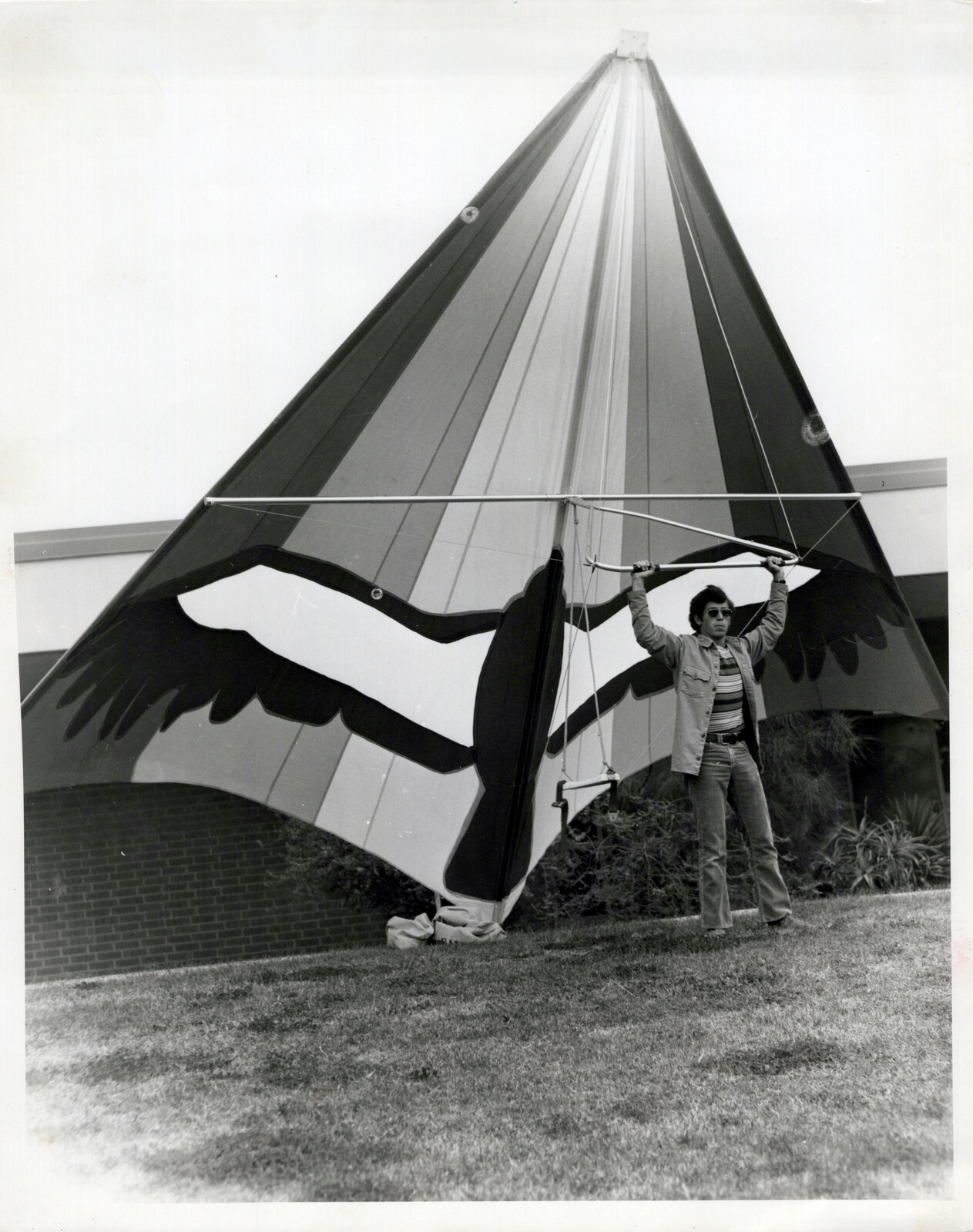
In the summer of 1975, four friends and I hiked in darkness up the back of El Capitan in Yosemite National Park. We had been flying for two years by then, on hang gliders we had bought after a chance encounter at San Jacinto with the people who invented the sport, who had given Bob Smead and me a summer of free lessons. We woke on the granite to clear sky and calm air, assembled our gliders, and took the half-dozen running steps that put us into 4,000 feet of vertical air. Aluminum tubing, steel cable, Dacron sail. Five people in the world had ever done this before that morning. The contraption was real and so was the cliff.
I have been thinking about that morning today, because the threshold I am standing on now has the same structure even though the contraption is software and the cliff is institutional. Forty years of fieldwork. Three generations of Macroscope refinement. A hundred essays of Coffee with Claude that worked out the practice. A working laboratory at Canemah. An architecture that the Virtual Field Research Coordination Network responded to, last month, with recognition rather than puzzlement. The launch run is short, but it is not unprepared.
This essay is the first published on sciencewithclaude.com. CWC was the practice. SWC is the propagation. The methods that worked here will, if I do the work, be picked up by other field stations, other naturalists, other independent researchers building working examples of what AI tools can do when they are aimed at the slow, careful work of understanding a place.
The El Capitan launch is what I keep returning to, because the photograph of that morning has never stopped teaching me something about what flight requires. You do not soar by force of will. You read the air, take the steps you have practiced, and trust the lift to be there. The hawks I watched from Black Mountain in 1996 hovered on ridge lift in storms because the air was rising and they knew how to hold their wings. The condors, when I watched them in those years, did the same on a larger scale.
The catalog cannot see what is rising. But the air is rising.
🌎
References
- - King, R. A. and Halpern, B. S. (2025). "Implementation of automated biodiversity monitoring lags behind its potential." *Environmental Research Letters* 20 064022. https://doi.org/10.1088/1748-9326/add02d ↗
- - Philson, C. (2026). "Field Stations in the Age of AI." *OBFS Newsletter* 1(24), May 2026. https://obfs.org/ ↗
- - National Center for Ecological Analysis and Synthesis (2026). "AI for the Planet." https://www.nceas.ucsb.edu/ai-planet ↗
- - The Virtual Field (n.d.). "Research Coordination Network." https://thevirtualfield.org/about/research-coordination-network/ ↗
- - Weir, A. (2011). *The Martian*. Crown Publishing.
- - Hamilton, M. P. (2026). "The Transition Experiment." *Coffee with Claude* essay 100, April 29, 2026. https://coffeewithclaude.com/post.php?slug=the-transition-experiment ↗
- - Hamilton, M. P. (2026). "The Word Comes Home." *Coffee with Claude*, April 19, 2026. https://coffeewithclaude.com/post.php?slug=the-word-comes-home ↗
- - Hamilton, M. P. (1996). "To Soar Like the Condors." *Notebook of a Digital Naturalist*, December 9, 1996. https://digitalnaturalist.com/post.php?slug=to-soar-like-the-condors ↗